
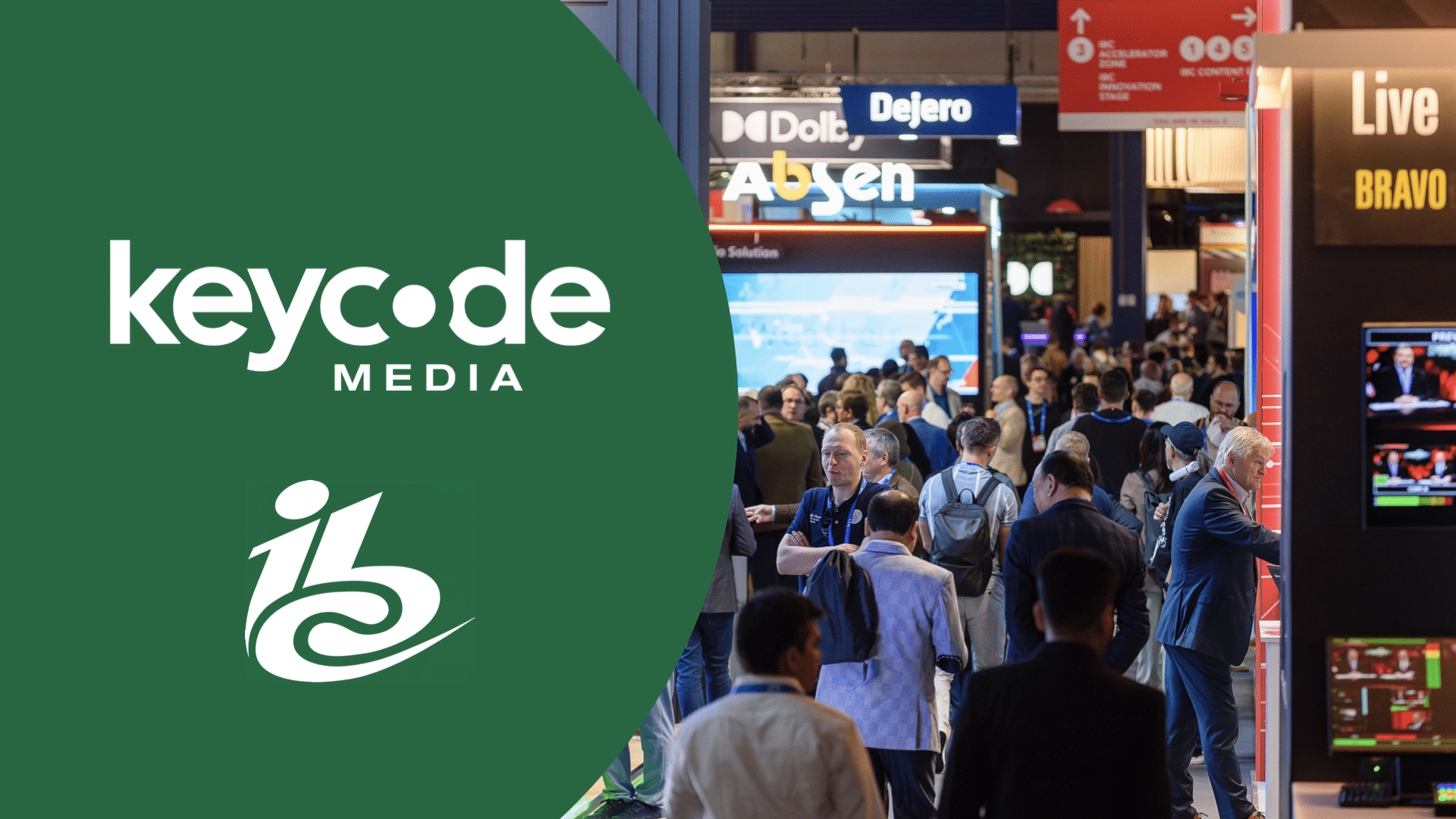
IBC 2026 wrapped up in Amsterdam with another massive showcase of where broadcast, production and professional media technology is heading next.
This year, many of the biggest developments were less about individual product categories and more about how complete production environments are changing. AI-assisted workflows are moving directly into editing, asset management and live production tools. SMPTE ST 2110 continues to become more accessible. Software-defined production is expanding. And manufacturers are finding new ways to combine routing, processing, storage, control and production into fewer platforms.
The Key Code Media team reviewed some of the biggest announcements from IBC 2026, along with several important products introduced earlier in 2026 that were highlighted around the show.
ABSEN
Absen’s IBC presence focused primarily on LED technology for broadcast studios, virtual production and on-camera applications. While there was not a major standalone IBC launch, Absen has introduced several significant LED products during 2026. These include the SA1.5 COB, a 1.5mm fine-pitch rental display using flip-chip COB technology, as well as the CL V3, AW Pro, KLCOB V3 and updated PL Plus V2X platforms. The overall direction is clear: increasingly fine pixel pitches, improved durability and more LED options designed for demanding production environments.
References: Absen 2026 Product News · Absen ISE 2026 Product Launches
ADDER
Adder continues to develop its KVM and remote-access portfolio for broadcast, control room and media environments. One of its more important 2026 updates is a significant expansion of ARDx, adding multi-head connectivity, user-controlled frame-rate management, easier device discovery and an SDK for deeper workflow integration and automation. Adder also released AIM 6, improving administration and visibility across ADDERLink INFINITY environments. These updates are particularly relevant as production teams increasingly need secure access to workstations and production systems across facilities and remote locations.
References: Adder ARDx Update · Adder IBC 2026
ADOBE
Adobe introduced a significant collection of AI-powered updates for Premiere and After Effects immediately ahead of IBC 2026. Premiere’s new Generative Media tools allow editors to generate video, sound effects, soundscapes and music directly inside the timeline rather than leaving the application to search for additional assets. Adobe is supporting both Firefly and partner AI models including Google Veo, Kling, Runway and Luma.
Adobe is also adding powerful audio tools including Enhance Audio, Separate Crosstalk and Dynamic Auto Ducking, while its new Color Mode gains Auto Color and additional cinematic grading controls. In After Effects, an AI Assistant can help with multi-step tasks across entire projects, including reorganizing layers, troubleshooting compositions and building expressions using natural-language instructions. Frame.io Mounted Storage is also now available across accounts, allowing full-resolution cloud media to stream directly into Premiere timelines.
For editors, this may be one of Adobe’s more important workflow updates in recent years because the focus is not simply on generating content. Adobe is trying to remove many of the interruptions that pull editors away from the timeline.
References: Adobe Premiere and After Effects AI Updates
AJA
AJA introduced the FS8, a new 1RU media processor built to help facilities bridge traditional SDI and newer IP environments. FS8 supports up to eight channels of HD or four channels of UltraHD processing, with frame synchronization, conversion, HDR tools and gateway functionality across 12G-SDI, SMPTE ST 2110, Dante and MADI.
AJA also introduced its OG-FiDO-4 family of openGear fiber converters, providing four channels of 12G/3G-SDI fiber transport. Both announcements reinforce an important industry trend: helping customers migrate toward IP without requiring an immediate replacement of their existing SDI infrastructure.
References: AJA FS8 Announcement · AJA OG-FiDO-4 Announcement
AVID
Avid had one of the most significant IBC 2026 announcements. Media Composer 2026.8 expands collaborative editing with broader shared-storage support, OpenTimelineIO interoperability and new AI-assisted tools.
More importantly, Avid previewed a browser-based Media Composer experience and deeper integration with Avid Content Core and Google Gemini. Content Core is also gaining production analytics, intelligent media search and Avid Assist, a governed orchestration layer for agentic AI.
The direction is toward AI helping prepare, organize, search and manage content before the editor ever begins making creative decisions.
References: Media Composer 2026.8 · Avid Content Core at IBC 2026 · Avid and Google Cloud
BACKLIGHT / ICONIK
Backlight expanded Iconik and Wildmoka around three major themes: AI-powered discovery, faster live-to-digital workflows and easier content distribution.
Iconik can now generate suggested metadata and support more natural-language media searches, while the new Iconik Publish Panel helps teams distribute approved content to destinations such as YouTube and Instagram. Backlight is also introducing an Iconik MCP Server, making it possible for approved AI applications to interact with media libraries.
Wildmoka’s new AI Moments capability can automatically identify important moments inside live feeds for faster clipping and publishing.
References: Backlight IBC 2026 Announcement
BLACKMAGIC DESIGN
Blackmagic Design used IBC week to introduce DaVinci Resolve 21.1, a substantial update that adds direct integration with AI assistants such as ChatGPT and Claude. Instead of limiting AI to individual built-in features, Resolve can now allow compatible assistants to interact with editing and media-management functions, opening the door to natural-language assistance across larger post-production workflows. The update also adds more than 100 tools and controls, including expanded still-photography support, multicam improvements and additional Fusion capabilities.
The announcement builds on an already significant year for Blackmagic Design. Earlier in 2026, the company introduced DaVinci Resolve 21, Fairlight Live, ATEM 4 M/E Constellation IP, HyperDeck ISO Recorder 100G, URSA Cine 12K LF 100G, URSA Cine Immersive 100G, DeckLink IP 100G and several new 100G infrastructure products. Blackmagic’s wider direction is increasingly connecting production, IP infrastructure, audio and post around one ecosystem.
References: Blackmagic Design DaVinci Resolve 21.1 · Blackmagic Design 2026 Product News
CANON
Canon used IBC to emphasize integration between PTZ, Cinema EOS and full-frame production cameras, while several of its most notable releases came earlier in 2026.
The new EOS R6 V is a video-focused full-frame camera supporting 7K RAW and Open Gate recording, while the RC-IP300 brings more advanced PTZ camera control into a smaller controller capable of managing up to 200 cameras. Canon also introduced the MS-510, an ultra-low-light camera using a 1-inch SPAD sensor.
Together, these products expand Canon’s options across cinematic, remote and specialty production environments.
References: Canon EOS R6 V · Canon RC-IP300 · Canon MS-510
CASTUS
CASTUS did not announce a major new product specifically for IBC 2026. The company continues to focus on integrated broadcast playout, streaming, video-on-demand, OTT, captioning and cloud services for government, education and community media organizations.
Its 2026 activity has largely centered around customer deployments and industry events rather than the introduction of a major new hardware or software platform.
References: CASTUS
EDITSHARE
EditShare introduced a more tightly connected approach to storage, asset management and AI. New Ultimate EFS configurations combine EFS shared storage, FLOW media management and GPU-powered FLOW AI processing within one system.
FLOW AI also adds expanded multilingual transcription, while EditShare continues evolving MediaSilo into a broader production media hub.
For customers, the goal is to reduce the number of separate steps required between storing media, discovering content, collaborating and delivering projects.
References: EditShare IBC 2026
EVERTZ
Evertz brought a wide range of infrastructure announcements to IBC.
The company’s ENX media core continues to expand with additional frame sizes and liquid-cooled configurations, while the new BRAVO-BLADE adds hardware acceleration for ultra-low-latency production switching. Evertz also demonstrated native MXL support and expanded its evertz.io cloud platform with BRAVO live production and DreamCatcher replay capabilities.
Together, these developments move Evertz closer toward a facility model where SDI, ST 2110, software-based production and cloud resources can operate as part of a more unified infrastructure.
References: Evertz IBC 2026 Press Releases
EVS
EVS had one of the broader live-production technology launches at IBC 2026. One of the headline announcements was XT-S, a new software-defined, multi-application production server. Rather than dedicating one server to one job, XT-S provides a common CPU/GPU platform where applications can be deployed according to the production’s needs. Initial applications include LiveCeption replay and UHD zoom, with additional capabilities planned over time.
EVS also introduced Neuron 4X, the next generation of its software-defined media-processing platform. Neuron 4X delivers four times the processing capacity of the previous generation and adds native 400Gb/s connectivity, allowing facilities to handle substantially higher UHD stream counts and bandwidth requirements without dramatically increasing rack space. Initial applications include the Bridge 4X IP gateway, with View 4X high-density multiviewing to follow.
At the production level, EVS also brought its T-Motion robotics portfolio to IBC, including robotic heads, pedestals, rail systems and OmniGlide, coordinated through the Choreon control platform. Other demonstrations included LSM-VIA automatic object tracking, AI-powered Xeebra Deblur, Flexible Control Room workflows and deeper Cerebrum orchestration.
Taken together, the announcements show EVS expanding from dedicated replay systems toward a much broader software-defined production and infrastructure ecosystem.
References: EVS XT-S · EVS Neuron 4X · EVS IBC 2026 Overview
FACILIS
Facilis showcased HUB 8.4, bringing substantial performance and security improvements to its shared-storage platform.
New Multi-Socket and Multi-Link Ethernet technology is designed to more fully utilize 10Gb and 25Gb workstation connections, while additional authentication and security improvements address increasingly hybrid production environments. Facilis is also continuing development of FastTracker media management and its FastCache acceleration technology.
For existing HUB customers, this is a significant platform update rather than a completely new storage architecture.
References: Facilis HUB 8.4 at IBC 2026
GRASS VALLEY
Grass Valley launched AVORA, a new all-in-one live production environment designed to combine switching, graphics, audio, remote guests, replay, recording, monitoring and delivery inside one platform.
Built from technology developed for GV AMPP, AVORA operates as a standalone production solution and is aimed at sports, education, corporate, venues and other teams that want professional production capabilities without assembling a large collection of separate systems.
Grass Valley also continued its broader push toward software-defined production and the Dynamic Media Facility architecture.
References: Grass Valley AVORA Launch · Grass Valley Dynamic Media Facility at IBC
IMAGINE COMMUNICATIONS
Imagine Communications introduced Magellan PanelFlex, a new configurable control environment for its Magellan Control System.
PanelFlex allows organizations to build operator interfaces around specific users and production tasks instead of relying on fixed control layouts. Imagine is also moving toward AI-enabled infrastructure through Model Context Protocol connectivity, creating a path for governed AI applications to interact with routing, monitoring and processing environments.
The larger story is making complex IP and hybrid broadcast infrastructure easier for operators to control without exposing all of the underlying technical complexity.
References: Imagine Magellan PanelFlex at IBC 2026
LIVEU
LiveU’s Q Era continues the evolution of cellular bonding into a broader intelligent contribution and production ecosystem.
At the center is the LU900Q Intelligent Production Unit, which combines a redesigned antenna system, six 5G Dual-MIMO modems and LiveU IQ connectivity intelligence to automatically optimize available network resources.
LiveU is also connecting contribution more directly with ingest, production and story-based workflow automation. For news, sports and remote production teams, the goal is to make connectivity decisions increasingly automatic while reducing the steps between capture and production.
References: LiveU Q Era at IBC 2026
NETGEAR AV
NETGEAR introduced Align, its first dedicated AV platform layer above the network switch itself.
The compact controller runs NETGEAR Engage and can provide network services, management and remote connectivity while creating a platform for future third-party AV applications.
NETGEAR also expanded the M4350 family with the ruggedized M4350-16M4V, designed for live production and touring, and the M4350-16C, which provides 16 100Gb ports for high-bandwidth aggregation. These products continue NETGEAR’s push toward making AV-over-IP and ST 2110 networks easier to deploy and support.
References: NETGEAR Align Controller · NETGEAR at NAB 2026
PANASONIC
Panasonic announced development of the AW-UE200 and AW-UER200, two new high-end 4K PTZ camera families built around a global-shutter MOS sensor.
The standard UE200 targets traditional PTZ applications, while the UER200 adds a roll mechanism that opens additional creative possibilities, including native vertical production. Select models will also support SMPTE ST 2110 and Dante, reinforcing Panasonic’s continued expansion into IP-based production environments.
Availability is planned for 2027, but IBC provided customers an early look at where Panasonic’s next generation of PTZ systems is headed.
References: Panasonic AW-UE200 and AW-UER200
QUICKLINK
QuickLink introduced a major 4K upgrade to its remote-contribution ecosystem with StudioEdge 4K, the first 4K model in the StudioEdge family, along with native 4K 60fps support for StudioCall.
When contributors connect through a compatible StudioCall setup, productions can preserve the caller’s native 4K 60fps signal and output it through professional 4K SDI or NDI workflows. For guests connecting through platforms such as Zoom or Microsoft Teams, where native 4K may not be available, StudioEdge 4K uses NVIDIA-powered AI upscaling to create a consistent 4K output.
This makes the platform particularly interesting for broadcasters, corporate studios and live-production teams that regularly mix professional remote contribution with consumer communications platforms but still want consistent image quality downstream.
References: QuickLink StudioEdge 4K and StudioCall 4K
RIEDEL
Riedel continues developing the SimplyLive Production Suite Flex as a software-based platform that can handle switching, replay, ingest, streaming and video review using flexible deployment and licensing models.
The broader SimplyLive direction is particularly relevant for organizations trying to produce more events with smaller crews and fewer dedicated hardware systems. Riedel is also expanding the connection between SimplyLive production tools, MediorNet infrastructure and its wider communications and control ecosystem, creating a more unified production environment across replay, transport and intercom.
References: Riedel SimplyLive Production Suite Flex
ROE VISUAL
ROE Visual introduced Sirius, a proprietary frequency-tunable LED driver developed specifically for broadcast, film and high-end on-camera applications.
Sirius is designed to improve LED performance when working with different camera systems and shutter configurations while maintaining accurate color reproduction. The first implementation is planned for ROE’s Ruby RB2.2F panels, with additional lower-pixel-pitch products to follow.
For virtual production and LED studio customers, this type of camera-to-display optimization can be just as important as raw resolution or brightness specifications.
References: ROE Visual Sirius Announcement
ROSS VIDEO
Ross Video introduced the Ultrix FR30, the largest Ultrix hyperconverged media infrastructure platform to date.
The 30RU chassis supports up to 576 x 576 UHD I/O while combining routing, multiviewing, signal processing, gateway functionality, production switching and control within the Ultrix architecture.
Ross also introduced Rio XL for higher-capacity UHD and slow-motion replay and updated PIERO sports analysis, OverDrive automation, DashBoard and other production tools. Ultrix FR30 and XPression Chameleon both received Best of Show recognition at IBC.
References: Ross Ultrix FR30 · Ross IBC 2026 Product Roundup
SCALE LOGIC
Scale Logic’s 2026 focus has been on connecting production storage, workflow orchestration, AI search and archive through its WorkflowConnect ecosystem.
One of the more interesting pieces is CaraOne, which provides AI-powered search across video, audio and metadata without requiring teams to manually log every asset. A CaraOne extension for Avid Media Composer lets editors search for relevant media directly inside the editing environment.
Scale Logic is also connecting archive platforms more closely with active production so older content remains easier to find and reuse.
References: Scale Logic WorkflowConnect
SHURE
One of Shure’s biggest IBC-related announcements was WAVETOOL 4, the latest generation of its professional audio monitoring and listening software for broadcast, live production, theater and houses of worship.
WAVETOOL 4 adds Global Instant Replay with up to 30 minutes of history, expands support to as many as 192 channels and eight concurrent users, and introduces a scalable customizable interface. It also adds intelligent microphone issue detection and expanded team communication with chat, images, reactions and voice notes.
The goal is to give RF and audio teams a shared environment where they can monitor live sources, review past events and troubleshoot issues without jumping between separate monitoring and communication tools.
Shure also introduced other significant products during 2026, including the SLX-D+ wireless system, but WAVETOOL 4 was the more direct IBC announcement.
References: Shure WAVETOOL 4 · Shure IBC 2026
SNS (STUDIO NETWORK SOLUTIONS)
Studio Network Solutions introduced significant updates across its EVO and AI platforms.
EVO OS 7.1.1 can deliver up to 40 percent higher aggregate performance on select SSD configurations, while expanded Media Composer support gives Enterprise users additional shared-storage options.
SNS also introduced AI Suite Advanced, which moves beyond semantic search into conversational and agentic AI. Users can ask questions about their media in natural language or instruct the system to perform multi-step tasks, such as identifying matching clips and automatically assembling an EDL, while keeping AI processing on premises.
References: SNS IBC 2026 Updates · SNS AI Suite Advanced
SONY
Sony brought one of the broadest portfolios to IBC.
Highlights included its new R-Series system cameras, SRG-AS10 and SRG-XS10 auto-framing PTZ cameras, the new FX5 Cinema Line camera, DP5 and DP7 camera controllers and ongoing development of the RIALTO 65 sensor block for VENICE 2.
Sony also showed continued development across Networked Live and software-defined broadcast technology. Another notable demonstration with Reuters combined C2PA content provenance and TAMS to preserve authenticity information as news footage moves from camera capture into near-live newsroom workflows.
References: Sony IBC 2026 Announcement · Sony and Reuters Content Authenticity Workflow
SPECTRA LOGIC
Spectra Logic launched Media Insight, a new capability inside its Rio Media Suite designed to make large archives easier for production teams to use.
Media Insight applies AI-powered enrichment to archived video so users can search and visually preview content before restoring the full-resolution source files. Once the right moment is found, Partial File Restore can retrieve only the portion of the file that is actually required.
For organizations with large tape or hybrid archives, that can turn content previously considered difficult to access into a much more active production resource.
References: Spectra Logic Media Insight
STORAGEDNA
StorageDNA continues developing DNAfabric as a centralized data-management layer connecting file storage, object storage, cloud and LTO.
Rather than requiring customers to replace existing storage platforms, DNAfabric is designed to provide common search, indexing, movement, backup, archive and synchronization across different storage locations.
The company’s messaging increasingly includes AI as another workflow that can benefit from a unified data layer. For media organizations managing growing amounts of content across multiple facilities, storage systems and clouds, that centralized approach is becoming increasingly important.
References: StorageDNA DNAfabric
TELESTREAM
Telestream’s IBC 2026 announcements focused on what it calls Practical AI, using AI analysis to trigger useful production and media-supply-chain actions instead of treating AI as a standalone tool.
Vantage workflows can use transcription, translation, metadata, summarization and content analysis to drive automated processes. Telestream is also expanding its cloud-native UP Platform with modular services for capture, review and monitoring.
Importantly, Telestream is adopting Model Context Protocol, allowing approved AI assistants and applications to interact with media services through natural-language requests while maintaining workflow controls.
References: Telestream at IBC 2026 · Telestream Practical AI
VIZRT
Vizrt used IBC 2026 for a major refresh of the entire TriCaster live-production family, simplifying the portfolio around three levels: TriCaster Mini, TriCaster Prizm and TriCaster Vizion.
TriCaster Mini remains the entry point for smaller teams and creators. TriCaster Prizm becomes the scalable mid-tier platform for environments such as schools, corporate production, sports streaming and live events. TriCaster Vizion sits at the top of the family for larger and more demanding production environments and can operate on premises or in the cloud.
A major change is the return to more integrated TriCaster hardware. Prizm and Vizion use new 2RU systems with onboard audio and dual redundant power, reducing the need for the external hardware configuration used by the previous generation. Both platforms are built around NDI and IP-native workflows.
Vizrt also introduced TriCaster Vizion AI/R, a subscription add-on that combines AI-powered real-time keying with augmented-reality graphics. This can allow productions to create virtual environments and AR elements without requiring a traditional green screen or dedicated virtual-production system.
The new LivePanel Pro gives Prizm and Vizion users a redesigned browser-based control interface for switching, audio, media, automation and macros, including configurable widgets and ready-made workflows. Vizrt also refreshed its replay offering with 3Play Vivid, adding 10-bit HDR and support for both on-premises and cloud workflows.
For longtime TriCaster customers, this is more than a feature update. Vizrt is effectively resetting the TriCaster product line around more traditional integrated hardware, modern IP workflows, simplified product tiers and optional AI and AR capabilities.
References: SVG Europe: Vizrt Refreshes TriCaster Portfolio at IBC 2026 · Vizrt at IBC 2026
YAMAHA
Yamaha introduced the new DM5 and DM5 Compact digital mixing consoles immediately ahead of IBC.
Designed for broadcast, corporate, houses of worship, theater and live sound, the DM5 family brings many of the workflows developed for Yamaha’s DM7 platform into a smaller format.
Yamaha also introduced new R Series utility I/O devices and continues expanding its broader 2026 professional-audio portfolio. For customers, Yamaha is creating more options between compact production systems and its larger flagship consoles.
References: Yamaha DM5 Announcement · Yamaha Professional Audio News
Planning Your Next Upgrade?
Interested in pricing on any of the products announced at IBC 2026? Not sure whether a new camera, storage platform, production switcher, IP workflow or AI-enabled tool will fit into your existing environment? Key Code Media can help.
Our team works with broadcast, production, post-production and professional AV customers to evaluate new technology, compare options and determine how products will integrate with existing systems and future upgrade plans.
Whether you need a quick product consultation, budgetary pricing or help designing a larger technology refresh, Key Code Media can help you understand what makes sense for your workflow before you invest.
Contact the Key Code Media team to discuss your next project, request pricing or schedule a technology consultation.